
YouTube Now Pauses Ads to Protect the Vibe: What Livestream Ad Timing Means for Brands in 2026
YouTube's new AI-driven ad suppression during peak livestream engagement marks a turning point. Combined with Twitch's MSA data-sharing overhaul, the two platforms are competing on ad experience quality for the first time. Here is what Nordic brands should understand.
The Ad Break That Did Not Happen
On April 14, 2026, YouTube announced a feature it calls "Vibe Protect." The premise is straightforward: when live chat engagement surges during a livestream - a clutch play, a surprise guest, a product reveal - YouTube's AI pauses ad delivery for every viewer in that stream. Separately, viewers who purchase Super Chats, Super Stickers, or gifts receive a personal ad-free window immediately after the transaction.
The feature applies automatically to any creator with automatic ads enabled, which is the default for monetized channels. YouTube has not disclosed the specific engagement thresholds or the duration of the ad-free windows, and likely never will - publishing the formula would invite coordinated chat-spam designed to trigger suppression on demand.
On paper, this is a quality-of-life improvement for viewers. In practice, it is something larger: the first time a major streaming platform has used real-time AI to subordinate ad delivery to audience experience. That decision has direct implications for every brand buying YouTube Live advertising inventory - and sets a precedent for how Twitch advertising will evolve.
Why Ad Timing Is Now the Battleground
For years, the livestream advertising conversation centered on reach and CPM. Which platform has the most viewers? What does a thousand impressions cost? Those questions still matter, but a new variable is overtaking them: when does the ad actually appear?
The problem is well-documented on Twitch. Mid-roll ads, reintroduced in 2020, drew immediate complaints from creators who worried that interruptive formats during gameplay would tank retention. By 2024, user surveys showed that average ad frequency on mid-tier and small Twitch channels had increased 60% compared to 2022. Viewers hitting pause and returning would trigger fresh ad loads, compounding frustration. The result was a measurable erosion of trust in the ad experience - and a growing incentive for viewers to install ad blockers.
YouTube's response is not to reduce ad volume. Creators using automated mid-roll ads still averaged a 20% uplift in instream ad revenue per hour in recent quarters. The shift is in when those ads fire. By suppressing ads during the moments viewers care about most, YouTube is making a bet: fewer badly-timed impressions are worth more than more impressions at random.
For advertisers, this changes the math. An ad that appears during a lull - between matches, during a setup break - lands in front of a viewer who is relaxed and receptive. An ad that interrupts a clutch moment lands in front of a viewer who is annoyed and reaching for the skip button. YouTube is now filtering for the first scenario automatically.
Twitch's Parallel Move: Data, Not Timing
The same week YouTube announced Vibe Protect, Twitch quietly updated its Monetized Streamer Agreement (MSA) with new language about advertiser data sharing. The update, effective May 13, 2026, formalizes three categories of data that Twitch shares with Amazon, advertisers, and service providers:
- Channel identity data: channel name, bio, and public-facing information
- Content metadata: stream categories and content tags
- Audience analytics: primary language(s) streamed, hours broadcast, and aggregated audience size by country
As Zach Bussey documented, this is not a new practice - Twitch has always shared some channel data with ad partners. What is new is the explicit enumeration in a legal agreement that every monetized streamer must accept. The 30-day notice period before enforcement is standard, but the specificity of the data categories signals that Twitch and Amazon are building a more granular targeting layer for advertisers.
This matters in the context of YouTube's move because the two platforms are now competing on different dimensions of the ad experience. YouTube is optimizing when ads appear. Twitch is optimizing who sees them and what the advertiser knows about the audience beforehand.
The Numbers Behind the Shift
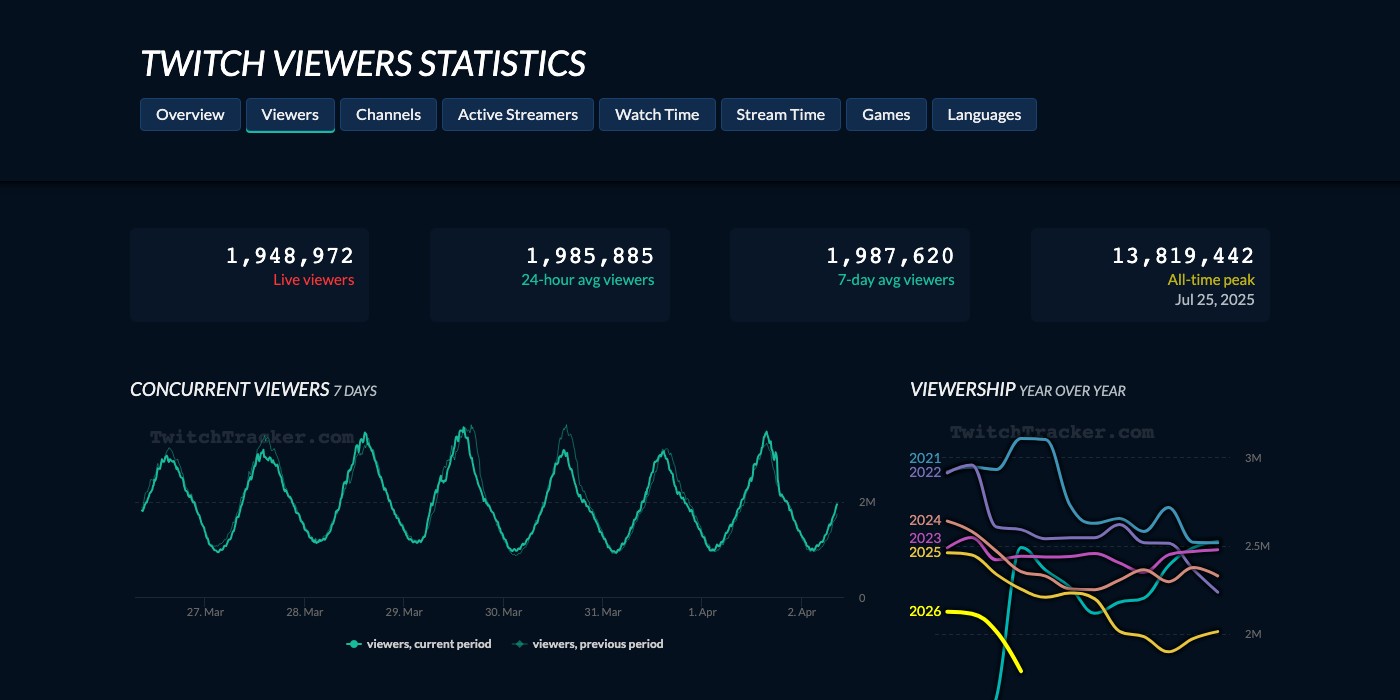
The competitive landscape makes these moves urgent. According to The Next Web, YouTube now commands roughly 47% of all live-streaming hours watched globally, while Twitch's share has dropped from 71% in late 2023 to 54%. Kick, meanwhile, grew 131% year-over-year to 4.5 billion hours watched.
YouTube's ad business is enormous. Alphabet reported $40.4 billion in YouTube advertising revenue in 2025. The Super Chat program alone has paid creators over $1 billion total, with revenue growing 45% year-over-year. Over 30% of U.S. live watch time now comes from connected TVs - a viewing environment where ad interruptions feel more like traditional television and tolerance for poor timing is even lower.
Twitch is coming at the same problem from the Amazon side. Twitch audience segments are now available worldwide in Amazon DSP, meaning advertisers can target viewers based on viewership categories - console gamers, non-gaming viewers, sports viewers - and retarget them across Amazon properties. Amazon's first-party data covers over 127 million U.S. households, and the "Ad Relevance" product uses AI to identify consumers at different purchase funnel stages without relying on third-party cookies.
Twitch is also testing its own timing innovation: pause ads that appear when a stream stops running, using viewer idle time rather than interrupting active viewing. The concept is less sophisticated than YouTube's AI-driven approach, but it addresses the same core insight - ads that do not interrupt perform better.
What This Means for Nordic Brands
Nordic advertisers face a specific version of this shift. The region's streaming audience skews young, tech-savvy, and ad-blocker-friendly. Any format that creates friction - poorly timed mid-rolls, repetitive pre-rolls - loses viewers faster in Stockholm or Oslo than in markets with lower digital literacy.
Three implications stand out:
YouTube livestreams just became a stronger buy for awareness campaigns. If your goal is brand recall, Vibe Protect means your ad will not appear during the exact moment a viewer is most engaged with something else. You get the viewer's partial attention during a natural pause, not their active irritation during a highlight. For Nordic brands running their first livestream campaigns, this reduces the risk of negative brand association.
Twitch's data layer is getting richer, and GDPR compliance matters more. The MSA update means Nordic brands buying through Amazon DSP can now access more granular audience data - language, country-level audience size, content categories. But the EU's GDPR framework applies to all of it. Amazon maintains a GDPR-compliant framework through Twitch Interactive Germany GmbH, but advertisers need to verify that their own data handling meets the same standard, especially when combining Twitch data with first-party CRM data.
Platform diversification is no longer optional. With Twitch restricting simulcasting for all creators (not just monetized ones) and YouTube investing in experience-first ad delivery, the platforms are diverging in what they offer advertisers. Running the same creative and targeting strategy across both is increasingly a mistake. The brands that win will build platform-specific playbooks - timing-optimized creative for YouTube, data-targeted native integrations for Twitch.
What to Do Before Q3 2026
The practical takeaway for media buyers is a short checklist:
Test YouTube Live placements now. Vibe Protect is rolling out globally. Run a small awareness campaign on YouTube livestreams and compare brand recall metrics against your Twitch benchmarks. The data will tell you whether the timing optimization produces a measurable lift.
Review your Amazon DSP targeting for Twitch. The MSA update means new audience segments are available or will be shortly. If you have been buying Twitch inventory through general display or pre-roll packages, check whether DSP-based targeting using Twitch lifestyle segments improves your cost per completed view.
Audit your GDPR data chain. If you operate in the Nordics and buy programmatic inventory on Twitch via Amazon DSP, confirm that your data processing agreements cover the new data categories in the MSA. A compliance gap here is an avoidable risk.
Build separate creative for each platform. A 30-second spot designed for a mid-roll on Twitch will land differently when it appears during a natural lull on YouTube. Consider shorter, mood-matched creative for YouTube livestreams - something that feels like a natural extension of the downtime, not a jarring interruption.
The streaming ad market is moving from "how many eyeballs" to "which eyeballs, at what moment." YouTube and Twitch are each answering that question differently. The brands that understand both answers will spend more efficiently than those still treating livestreams as a single inventory bucket.
Sources:
- TechCrunch - YouTube livestreams will now hold back ads during peak engagement
- MediaPost - YouTube To Pause Ads During Peak Livestream Engagement
- The Next Web - YouTube livestream ads peak engagement pause
- Zach Bussey - Twitch MSA advertiser data sharing update
- Twitch - Monetized Streamer Agreement
- Tubefilter - Twitch testing pause screen ad breaks
- Improvado - Amazon DSP Advertising Guide
- Amazon Ads - EU Data Protection and Privacy