
Creator Content Is Escaping Social Media: The $11 Billion Paid Amplification Shift Nordic Brands Should Understand
The fastest-growing segment of creator ad spend is not social boosting. It is paid amplification into CTV, display, and retail media. For Nordic brands running live stream campaigns, this changes the ROI equation entirely.
The $44 billion number hides a structural change
U.S. creator ad spend is projected to reach $43.9 billion in 2026, up from $37.1 billion in 2025, according to IAB's Creator Economy Ad Spend Report. That 18% year-over-year growth rate is roughly four times faster than total media spend. The number gets quoted frequently. What gets quoted less is where that growth is actually coming from.
The answer is not more Instagram sponsorships or additional TikTok posts. The fastest-growing category of creator-related spending is paid amplification of creator content beyond social media: into connected TV, display advertising, and retail media networks. That segment alone is projected to hit $11.1 billion in 2026, a 56% increase from $7.1 billion in 2025.
By comparison, paid amplification of creator content on social media is growing at 48%, from $8.9 billion to $13.2 billion. Both numbers are large, but the off-platform category is accelerating faster because it represents a genuinely new use case, not an expansion of an existing one.
This is a structural shift in how brands think about creator partnerships. A creator deal is no longer a social media transaction. It is a content supply chain.
Four ways brands spend on creators, and why one is pulling ahead
The IAB framework breaks creator ad spend into four categories. Understanding them matters because most Nordic advertisers still operate in only the first two.
Adjacent placement means buying ad inventory that appears alongside creator content, such as pre-roll before a YouTube Live video or a display ad on a Twitch channel page. The brand does not work with the creator directly. It buys proximity.
Direct partnerships are the traditional model: a brand pays a creator to produce and post content. The creator integrates the message into their own feed, stream, or video. This remains the largest single category.
Paid amplification on social media takes content from those direct partnerships and boosts it through paid distribution on the same platforms. A TikTok post becomes a Spark Ad. An Instagram Reel becomes a paid placement in Explore. The creator's face and voice stay in the ad, but the distribution is bought, not earned.
Paid amplification beyond social media is the category growing at 56%. It takes that same creator content and runs it as a CTV spot, a programmatic display unit, or a retail media placement inside an e-commerce environment. The content leaves the platform where it was created and enters channels that have historically been reserved for agency-produced creative.

What off-platform amplification looks like in practice
This is not theoretical. Brands have already moved creator content into channels that most marketers still associate with traditional production.
Best Buy ran the first major test during the 2025 holiday season. The retailer integrated creator-led creative into connected TV placements for the first time, featuring lifestyle creator Jenny Reimold in CTV spots that showcased tech gifts through her personal perspective rather than a scripted commercial. The result: influencer-led CTV creative performed on par with Best Buy's traditionally produced assets, at a fraction of the production cost. The retailer subsequently partnered with over 200 additional creators and launched shoppable creator storefronts.
The pattern extends beyond retail. Digiday reports that brands across CPG, automotive, and financial services are pulling creator content into programmatic display and retail media networks. A net 61% of marketers plan to increase their investment in creator content this year, and nearly two-thirds of that new spend is being reallocated from traditional paid and digital channels, not added as net-new budget. That means 60% of brand leaders are cutting print advertising investment, and 50% are reducing linear TV spend, to fund this shift.
The economics are straightforward. Creator content is cheaper to produce than traditional commercial shoots. It performs comparably or better across engagement metrics. And it carries the implicit endorsement of a real person, which research consistently shows drives higher trust with audiences under 35. The average ROI on creator marketing spend sits at $5.78 per dollar invested, with top campaigns reaching $18.
Why live stream content is built for this
Most of the amplification examples cited in industry reports involve short-form video from TikTok or Instagram. But live stream content has structural advantages that make it arguably better suited for off-platform distribution.
Live streams produce volume. A single four-hour broadcast generates more raw footage than most creator partnerships produce in a month. That footage is unscripted, which means it carries the authentic tone that makes creator content outperform studio creative in the first place. The reactions are real. The gameplay moments are unrepeatable. The audience interaction is visible on screen.
Stream clips, in particular, are a natural fit for CTV and display formats. A 15- to 30-second clip of a streamer reacting to a product, winning a clutch moment while an overlay ad is visible, or genuinely engaging with a brand integration translates directly into a short-form video ad unit. The production is already done. The content just needs to be cut and formatted.
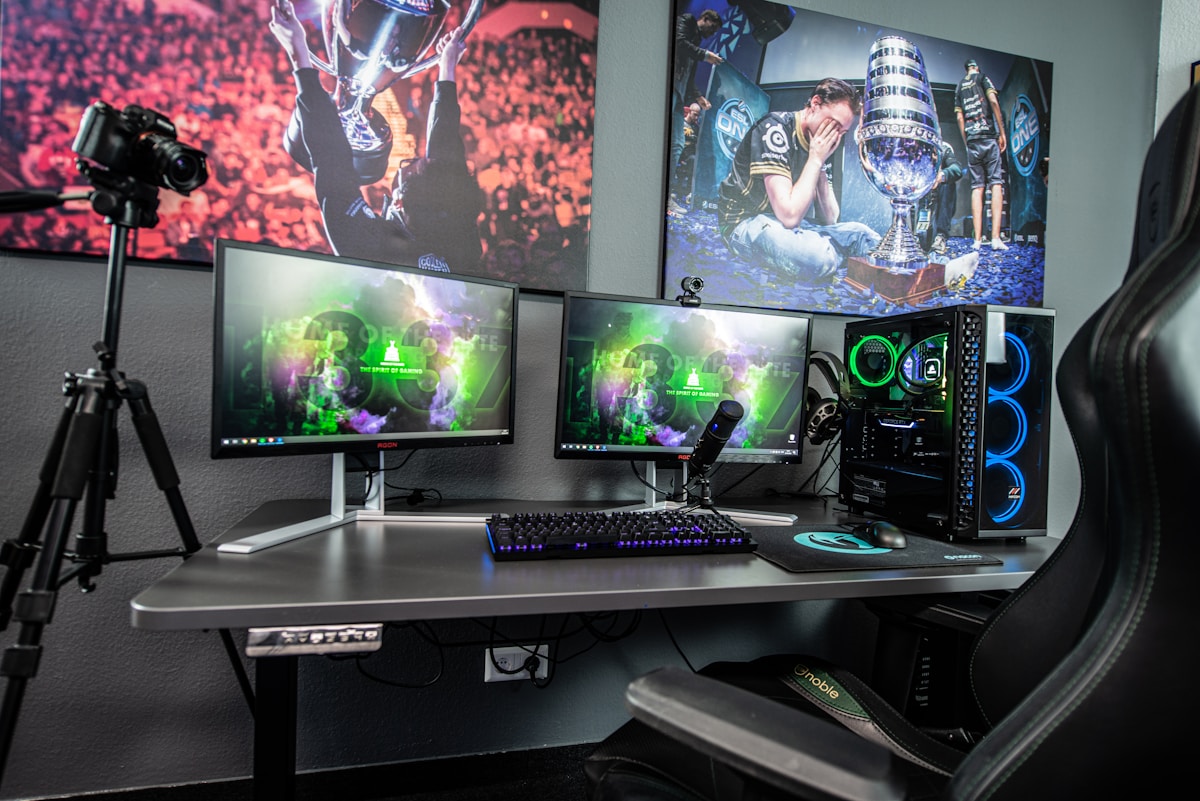
For brands running overlay ad campaigns on live streams, this unlocks a secondary value layer. The overlay appears during the broadcast, reaching the live audience. But a clip of that same broadcast moment, with the overlay visible, can then be amplified as a display or CTV asset, reaching a completely different audience through a completely different channel. One campaign activation, two distribution paths.
Amazon's own advertising infrastructure already supports this pipeline. Twitch inventory is available through Amazon DSP, which means advertisers can target audiences using Amazon's first-party purchase data. A brand can run overlay ads on a Nordic Twitch streamer, capture clip content from that stream, and then amplify those clips as CTV spots served through Fire TV or as display units across Amazon's programmatic network. The targeting, measurement, and distribution infrastructure already exists.
The Nordic calculation
For Nordic brands, the paid amplification shift changes the math on live stream advertising in a specific way.
The Nordic creator pool is small relative to the U.S. or UK. The number of streamers with meaningful, engaged audiences in Norwegian, Swedish, Finnish, or Danish is measured in hundreds, not thousands. That has traditionally been framed as a constraint: fewer creators means fewer campaign slots, less flexibility, and higher individual dependency.
But in a paid amplification model, a smaller creator pool is less of a limitation. The value of a creator partnership is no longer bounded by the size of their live audience. A Nordic streamer with 2,000 concurrent viewers produces the same quality of authentic, culturally specific content as a U.S. streamer with 20,000 viewers. The difference in live reach gets erased when that content enters a programmatic CTV or display environment, where distribution is bought by impression volume, not limited by channel size.
This means a Norwegian brand can work with a mid-tier Norwegian-language streamer, produce culturally resonant content that speaks directly to a Nordic audience, and then amplify that content at scale through CTV and display channels that reach the same demographic far beyond the streamer's live viewership. The live stream becomes a content studio, not just a media placement.
For agencies and media buyers in the Nordics, this reframes the value proposition of every streamer deal. The question is not just "how many people will watch this live?" It is "what content will this produce, and where else can we run it?"
Building an amplification-ready campaign
Treating live streams as a content source for paid amplification requires planning that most Nordic streamer deals do not currently include.
Rights management is the foundation. Standard influencer agreements in the Nordics typically grant the brand rights to use content on the creator's social channels and the brand's own channels. They rarely include CTV, programmatic display, or retail media rights. If you plan to amplify clips beyond social platforms, those rights need to be negotiated upfront. Retrofitting usage rights after a campaign has run is expensive and often impossible.
Clip strategy needs to be intentional. Not every stream moment translates into a 15-second CTV spot. Brands should identify the moments they want to capture before the stream begins: product reactions, gameplay highlights with overlay visibility, genuine audience interaction. Having a clipping plan, whether manual or using AI-powered clipping tools, ensures the raw footage actually produces usable amplification assets.
Format adaptation is not optional. A horizontal Twitch stream clip does not automatically work as a vertical mobile display unit or a 16:9 CTV spot. The content needs to be reformatted, subtitled, and in some cases re-edited to fit the technical requirements of each distribution channel. This is production work, but it is significantly less expensive than creating original assets for each format from scratch.
Measurement must bridge channels. The most common objection to off-platform amplification is attribution. If a viewer sees a CTV spot featuring a streamer clip, how does the brand measure impact? Amazon's DSP provides closed-loop measurement for Twitch-to-Fire TV campaigns. For other CTV and display environments, brands need to agree on KPIs before launch: aided recall, site visits, or conversion lift studies, rather than last-click attribution.
The ROI equation is different now
The traditional way to evaluate a live stream campaign was straightforward: cost per thousand live viewers, engagement rate during the stream, and click-through on any embedded calls to action. Those metrics still matter, but they now capture only a fraction of the value a campaign can generate.
When the same campaign also produces five to ten amplifiable clips that can run as CTV and display assets for weeks or months after the live broadcast ends, the cost-per-impression calculation changes fundamentally. The upfront cost of the streamer partnership gets amortized across every subsequent impression those clips generate in paid channels.
For Nordic brands that have been cautious about live stream advertising because of the relatively small live audiences available in the region, paid amplification removes the ceiling. The live stream is the starting point. The reach comes after.
Sources:
- IAB Creator Economy Ad Spend Report 2025
- Digiday: Creator economy in 2026
- IAB: Creator ad spend to reach $37 billion
- Social Native: Creator marketing as 2026 growth engine
- Net Influencer: U.S. creator marketing spending beyond social
- The Hype Magazine: Creator economy rewiring $117B in social ad spend
- Factor-a: Twitch inventory in Amazon DSP
- WrittenlyHub: Creator economy ad spend hits $44B