
Your Buyers Are on Twitch: A B2B Case for Live Streaming Ads
Developers, sysadmins, and finance professionals spend hours a day on Twitch and YouTube Live watching coding streams and market commentary. Here is how B2B, SaaS, and fintech brands can reach them without looking out of place.
The audience you think isn't there, is there
Walk into most B2B marketing planning meetings and mention Twitch, and you'll get the same reaction: "Isn't that gaming?" Yes, and also no. Twitch's own numbers put average daily viewers well into the millions, and a meaningful chunk of that traffic isn't watching Fortnite. It's watching someone build a SaaS product from scratch on a "coding stream," refactor a compiler on camera, or narrate a trading terminal during a live market session.
The "Software and Game Development" category on Twitch runs around the clock with hosts live-coding everything from indie games to internal tools. Channels built around system design walkthroughs, DevOps pipelines, and open-source contributions pull consistent four-figure concurrent viewership. On YouTube Live, the crossover is even more direct: finance commentators, crypto analysts, and enterprise tech reviewers stream multi-hour sessions that look a lot more like a market wrap-up show than a gaming broadcast.
This is not a niche. It's an unbundled version of the audience B2B marketers already chase on LinkedIn and in podcast pre-rolls, except younger, more technical, and watching with their guard down instead of their LinkedIn-scrolling thumb on autopilot.
Why this audience is actually a good fit for B2B
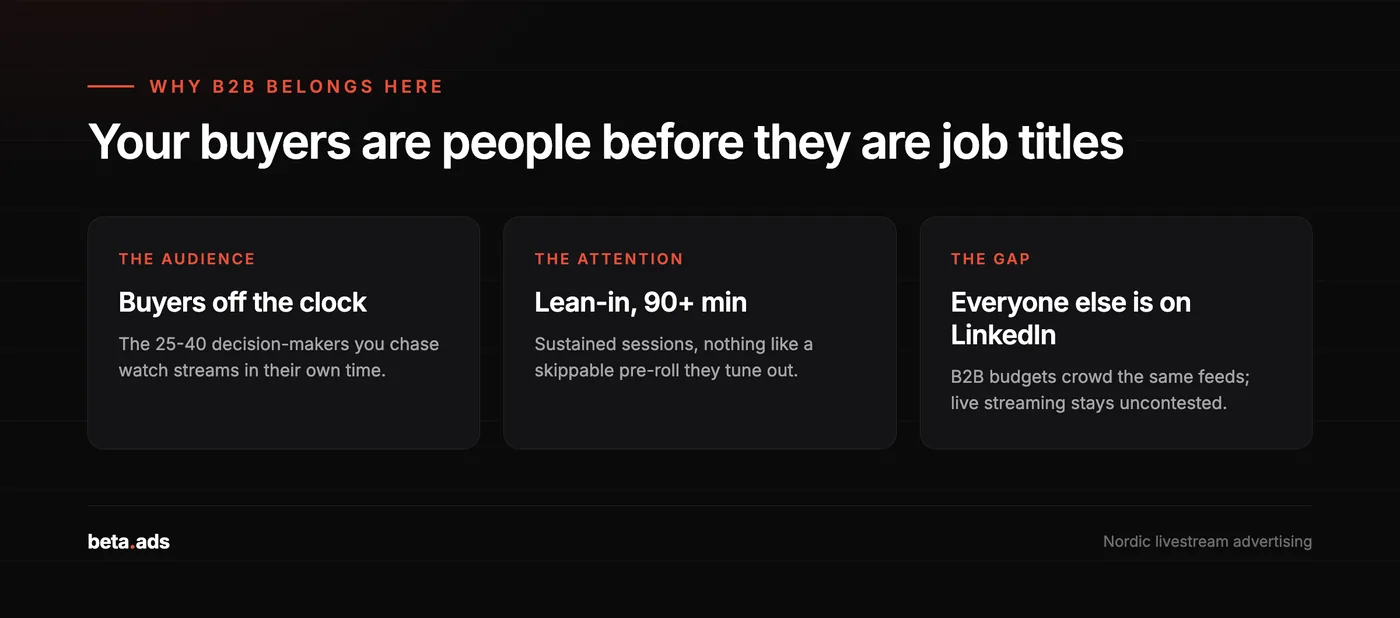
Three traits make developer and finance-adjacent streaming audiences unusually good targets for B2B, SaaS, and fintech advertisers:
- They self-select into their expertise. Someone watching a three-hour live debugging session on a Kubernetes cluster is not a casual viewer. They work with infrastructure, or they're studying to. That's a purer intent signal than a display ad served against a generic tech news article.
- They watch in long, undistracted blocks. Coding and trading streams routinely run two to six hours. Viewers keep the stream on a second monitor while they work, which means repeated brand exposure across a single sitting, not a six-second pre-roll they skip.
- Streamers already vouch for tools on camera. A developer streamer switching from one API client to another, or a trading streamer pulling up a specific charting platform, is an organic product endorsement that a display banner can never replicate.
What the ad formats actually look like
This isn't about buying a 30-second TV spot and cutting it down. Live streaming inventory has its own format logic:
- Sponsored segments: the streamer pauses their build or their market recap to walk through your product for 2 to 5 minutes, in their own words, inside their own workflow. This is the highest-recall format and the one that reads as least like an ad.
- Overlay and panel placements: your logo or a rotating banner lives in the stream layout itself (below the webcam, in the "About" panel, in chat commands like !sponsor). Lower cost, always-on visibility, good for awareness campaigns running alongside a segment buy.
- Interactive chat integrations: polls, giveaways tied to your product ("drop your repo link in chat for a free year of X"), or Q&A drops where the streamer takes viewer questions about your tool live. These convert chat lurkers into active participants, which is where B2B intent actually shows up in the data.
- Pre-roll and mid-roll on VOD: the recorded version of the stream, useful for extending reach past the live audience into YouTube search traffic for "how I built X" content that keeps getting watched for years.
None of these require your product to be a game or a consumer app. A CI/CD platform, a payments API, or a trading terminal fits a coding or finance stream more naturally than it fits a 15-second Instagram Reel.
Picking the right streamers (this is the actual hard part)
The mistake B2B teams make when they first look at this channel is benchmarking against gaming influencer rates and getting spooked by follower counts built for consumer reach. Ignore total followers. Look at:
- Category fit over audience size. A software development streamer with a few thousand concurrent viewers who are all engineers beats a variety streamer with ten times that number who are there for banter.
- VOD retention, not just live numbers. Many devs and finance-adjacent viewers catch these streams as recorded VODs the next day during commute or lunch. A streamer whose VODs get watched days later is compounding your placement for free.
- Chat quality. Skim the chat during a segment. Are viewers asking follow-up technical questions, or just spamming emotes? That tells you whether the audience is engaged enough to act on a CTA.
- Platform, not just personality. Twitch skews toward live, real-time build sessions. YouTube Live and its VOD afterlife skew toward searchable, evergreen content. A fintech brand explaining a complex product often gets more mileage from YouTube Live's searchability than from Twitch's live-only discovery.
This is exactly the kind of selection work that separates a campaign that gets a few thousand impressions against the wrong audience from one that gets a smaller, sharper audience that actually signs up. It's also why platform choice matters as much as streamer choice. Our breakdowns of Twitch advertising and Kick advertising formats go deeper into how the buying mechanics and audience composition differ between platforms.
What to measure (and stop pretending direct response is the only KPI)
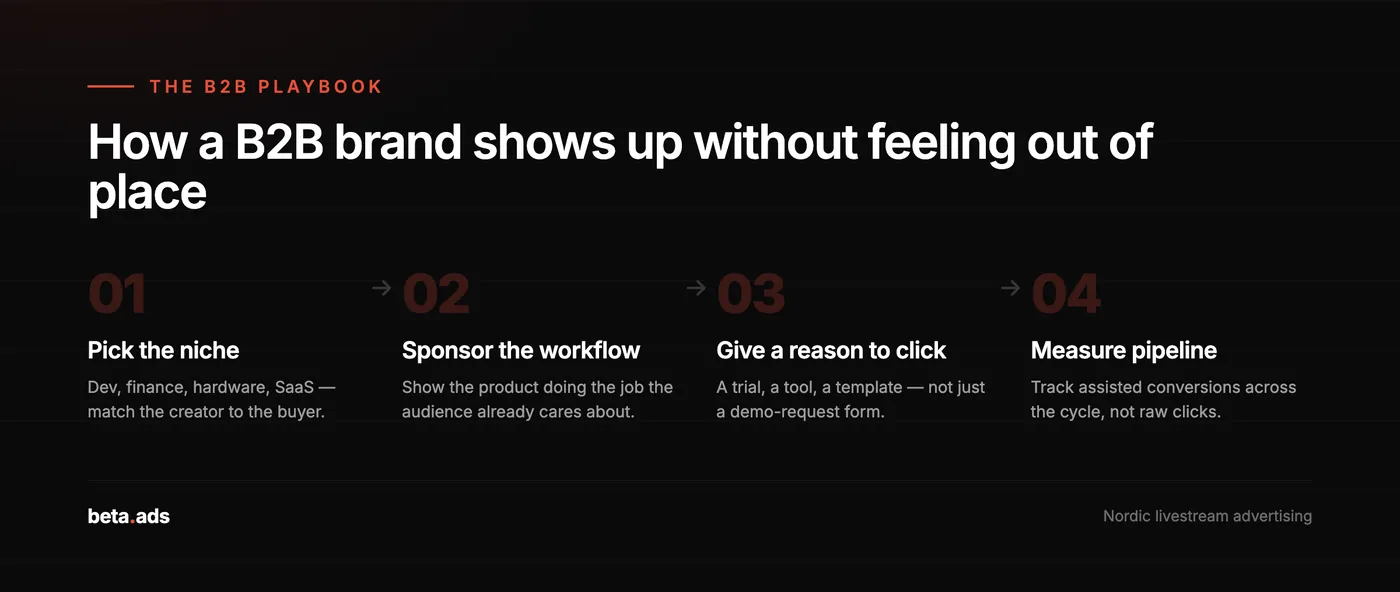
B2B sales cycles are long. A viewer watching a live-coding stream today is not going to sign a six-figure SaaS contract by Friday. Treat this channel with the same patience you'd apply to podcast sponsorships or industry newsletter placements:
- Track branded search lift and referral traffic to a dedicated landing page in the days following a segment, not just click-through in the moment.
- Use a unique promo code or UTM per streamer so you can see which channels actually move people down funnel, even slowly.
- Watch demo requests and trial signups against a control period, not against an unrealistic same-day conversion target.
- If your product has a free tier or open-source component, track GitHub stars, npm downloads, or sign-ups as a leading indicator before revenue shows up.
Some of our case studies show how this plays out across different verticals, including how sponsored segment performance compares to overlay-only campaigns when the goal is qualified pipeline rather than raw reach.
Budget reality
You don't need a six-figure commitment to test this. A single sponsored segment with a mid-tier developer or finance streamer, paired with a chat-poll integration, is a reasonable pilot spend and gives you enough signal (watch time, chat engagement, landing page traffic) to decide whether to scale into a recurring monthly slot or a multi-streamer roster. Recurring placements with the same 2 to 3 streamers tend to outperform one-off spot buys, because the audience starts to recognize your brand as part of that creator's regular content rather than an interruption.
Where to start
If your buyer persona includes anyone who spends part of their day writing code, managing infrastructure, or watching markets move, they are very likely already watching a live stream while they do it. The question isn't whether this audience exists. It's whether your team is willing to test a format that looks unfamiliar on a media plan but matches exactly where technical and financial professionals already spend unguarded attention.
Reach out through our contact page if you want to talk through which streamers, formats, and platforms fit your specific product and sales cycle. We'll tell you honestly if live streaming isn't the right channel for your stage, and if it is, we'll help you find the right first placement to test it properly.